Safety doesn’t improve because you posted a sign. It changes when people talk—really talk—about risks, behaviors, and what could go wrong. That’s where a well-run toolbox talk topics workshop becomes essential. It’s not just another meeting to check off a list. It’s a focused opportunity to turn routine safety discussions into meaningful conversations that shape behavior on the job.
Most teams treat toolbox talks as a compliance chore. Topics are recycled, delivery is monotonous, and engagement is low. But when done right, a toolbox talk workshop can reset safety culture, uncover hidden risks, and empower field crews to lead safety themselves. The key? Structure, relevance, and interaction.
Let’s break down how to design and run a workshop that transforms how your team approaches safety discussions.
Why Standard Toolbox Talks Fail
Many organizations run toolbox talks the same way every week: a supervisor reads from a pre-written script, asks if anyone has questions (nobody does), and logs attendance. The result? Disengagement, repetition, and missed opportunities.
Common failure points include:
- Generic topics – “Slip, trip, and fall” every quarter with the same visuals.
- Top-down delivery – No input from crews who face real hazards daily.
- No follow-up – No way to measure if the message landed or changed behavior.
- Overreliance on external content – Downloaded PDFs that don’t reflect site conditions.
A workshop format flips this model. Instead of delivering content, you facilitate creation. Team members don’t just listen—they design talks, share near-misses, and solve problems together.
What a Toolbox Talk Topics Workshop Actually Is
This isn’t a lecture. It’s a collaborative session where workers learn to develop, deliver, and improve safety talks tailored to their environment.
The goal? Build a team that can:
- Identify relevant hazards before incidents occur
- Turn experience into teachable moments
- Deliver clear, concise, and impactful safety messages
- Rotate facilitation so ownership spreads across the team
Think of it as “safety communication training” disguised as a workshop. You’re not just covering topics—you’re building a system for continuous safety dialogue.
Core Components of an Effective Workshop
A successful session balances instruction, interaction, and application. Here’s what to include:
#### 1. Hazard Recognition Drill Start with real photos or sketches of your worksite. Ask small groups to spot hazards in 5 minutes. Then compare findings. This primes attention and shows how perspectives differ.
Example: A photo of a partially blocked fire extinguisher might get flagged by one group but missed by another. Use this to discuss complacency and visual scanning habits.
#### 2. Topic Brainstorming Session Use a whiteboard or digital board to crowdsource potential toolbox talk topics. Encourage specificity:
- Instead of “PPE,” try “Why we’re seeing loose lanyard clips on fall harnesses”
- Instead of “Housekeeping,” try “Trip hazards near mobile scaffolds in tight corridors”
Prioritize topics with high risk or recent close calls.

#### 3. Talk Development Lab Break into teams. Assign each a recent incident, observation, or priority hazard. Task them with creating a 5-minute toolbox talk using this template:
- Hazard: What is it?
- Risk: What could go wrong?
- Real Example: Share a near-miss or incident
- Controls: What should we do differently?
- Ask the Team: One question to spark discussion
After 20 minutes, each group delivers their talk. Others provide feedback using a simple rubric: clarity, relevance, engagement.
#### 4. Delivery Practice with Peer Coaching Rotate facilitators. Record short talks (audio or video). Play back anonymously and discuss: - Was the message clear? - Did it invite participation? - Was body language confident?
This builds confidence and improves communication skills across the team.
#### 5. Feedback & Continuous Improvement Loop End with a quick survey: - What topic felt most relevant? - Who surprised you with their delivery? - What will you do differently next week?
Use responses to refine future workshops and talk schedules.
Practical Toolbox Talk Topics for Real Workplaces
Avoid overused, vague themes. Focus on specific behaviors and conditions your team actually faces. Here are 10 high-impact topics that work across industries:
| Topic | Why It Works | Real-World Trigger |
|---|---|---|
| Blind spot awareness around heavy equipment | Reduces struck-by incidents | Recent near-miss with backhoe |
| Proper ladder setup on uneven ground | Prevents falls, often overlooked | Inspection found 3 unsecured ladders |
| Glove selection for chemical handling | PPE misuse leads to exposures | Worker reported skin irritation |
| Communication breakdowns during shift handover | Causes errors and rework | Misaligned crane lift scheduled |
| Fatigue signs in long-haul or night shifts | Subtle but high-risk | Driver arrived late, appeared drowsy |
| Dust control in confined spaces | Respiratory risk + visibility | Grinding job in mechanical room |
| One-on-one safety check-ins | Builds psychological safety | New hire hesitant to report issues |
| Slip resistance of footwear on wet surfaces | High-frequency, low-severity risks | Multiple minor slips in wash bay |
| Tool inspection red flags | Prevents equipment failure | Worn power tool cord bypassed |
| Mental load during multitasking | Cognitive safety is often ignored | Worker missed lockout step |
These topics work because they’re grounded in observable behaviors and real events. They’re not hypothetical—they’re urgent.
Common Workshop Mistakes (And How to Avoid Them)
Even well-intentioned workshops fall short. Watch for these pitfalls:
- Too much lecture, not enough doing
- → Fix: Keep facilitator talk under 20%. Focus on activities.
- Only supervisors participate
- → Fix: Assign roles to every attendee—facilitator, note-taker, timekeeper, feedback giver.
- No follow-through on generated talks
- → Fix: Schedule the best employee-created talks for next week’s site meetings.
- One-size-fits-all topics
- → Fix: Segment workshops by crew or trade when possible (e.g., electricians vs. laborers).
- No measurement of impact
- → Fix: Track behavior changes, participation rates, or reduction in related incidents.
How to Scale the Workshop Across Teams
Once you’ve run a successful session, replicate it—but adapt. Here’s how:
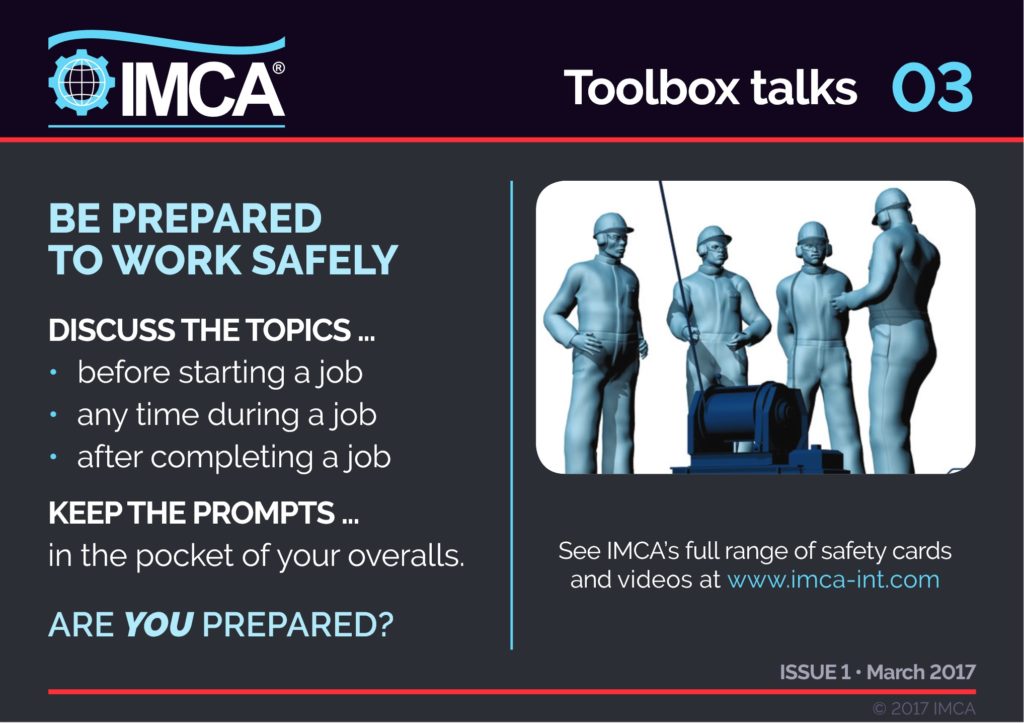
- Create a workshop kit: Include templates, sample videos, hazard photos, and a facilitation guide.
- Train peer leaders: Certify 2–3 workers per crew to run future workshops.
- Rotate locations: Host at different sites to increase buy-in.
- Link to safety KPIs: Tie workshop outcomes to leading indicators like hazard reports or participation.
Scaling isn’t about uniformity—it’s about consistency in quality and empowerment.
Real-World Example: Roofer Safety Turnaround
A roofing contractor had recurring falls from low-slope edges. Standard talks on harness use weren’t working. They ran a toolbox talk workshop with crews.
Workers created a talk called “Why We’re Not Hooking Off at the Edge.” One crew member shared a story: “I unhooked because my lanyard wasn’t long enough—felt safer moving free for 10 seconds.” That honesty sparked a redesign of tie-off points.
They filmed the talk and played it at all site starts. Within six weeks, edge hook-up compliance rose from 68% to 94%. The workshop didn’t just educate—it solved a real barrier.
Tools to Support Your Workshop
You don’t need high-tech solutions. But the right tools make facilitation easier and content more durable.
Here are five practical options:
| Tool | Best For | Key Strength |
|---|---|---|
| Microsoft Whiteboard | Virtual or hybrid workshops | Real-time collaboration, easy export |
| Miro | Visual brainstorming | Infinite canvas, templates for idea mapping |
| Canva | Creating talk slides | Drag-and-drop design, mobile-friendly output |
| Kaizala (Microsoft) | Field team communication | Send talks, collect responses, track views |
| Notion | Organizing talk library | Centralize topics, assign owners, set schedules |
Choose tools that match your team’s tech comfort and access. A printed flip chart works just as well as a digital board if it gets people involved.
Make It Stick: From One-Off to Ongoing Practice
The workshop isn’t the end—it’s the launchpad. To sustain momentum:
- Schedule quarterly refreshers
- Recognize top contributors (“Talk of the Month”)
- Revisit topics annually with updated examples
- Integrate employee-created talks into onboarding
The best safety cultures don’t rely on top-down messaging. They grow from peer-to-peer conversations that feel authentic and actionable.
Run your toolbox talk topics workshop not to comply, but to connect. Because when workers lead the safety discussion, safety becomes part of the job—not an add-on.
Frequently Asked Questions
What is the purpose of a toolbox talk workshop? To train teams to create and deliver relevant, engaging safety talks that address real workplace hazards and improve safety behavior.
How long should a toolbox talk workshop last? A full session typically takes 2–3 hours, allowing time for activities, practice, and feedback.
Who should facilitate the workshop? Ideally, a safety professional or trained supervisor—but the goal is to develop peer facilitators across the team.
Can office teams benefit from this workshop? Yes—adapt topics to ergonomics, mental health, cybersecurity, or emergency evacuation procedures.
How often should we run these workshops? Once per quarter is ideal to refresh skills, introduce new topics, and onboard new team members.
What if workers are reluctant to speak up? Start with anonymous input, use small groups, and model vulnerability by sharing your own mistakes.
Should toolbox talks be documented? Yes—record topics, attendees, key discussion points, and follow-up actions for compliance and continuity.
FAQ
What should you look for in Toolbox Talk Topics Workshop: Engage Your Team Effectively? Focus on relevance, practical value, and how well the solution matches real user intent.
Is Toolbox Talk Topics Workshop: Engage Your Team Effectively suitable for beginners? That depends on the workflow, but a clear step-by-step approach usually makes it easier to start.
How do you compare options around Toolbox Talk Topics Workshop: Engage Your Team Effectively? Compare features, trust signals, limitations, pricing, and ease of implementation.
What mistakes should you avoid? Avoid generic choices, weak validation, and decisions based only on marketing claims.
What is the next best step? Shortlist the most relevant options, validate them quickly, and refine from real-world results.